What I call generative reading is a way of reading that looks beyond what the poem is “about” to find entry points into your own work. It is not about an attempt to imitate, but rather, to notice—and to use, from any poem you read, what resonates with you and your sensibilities and interests as a poet. My experience is that, if you get into the practice of generative reading, you’ll never need a poetry prompt again! Generative reading means being alert to things like:
- Tropes / modes of discourse: Is the poem a plea, complaint, rant, credo, mediation, narrative, etc.?
- Stance or goal of the poem
- Words and phrases that jolt or nudge something in you
- Possible titles, either by borrowing the title of the poem or using a line or phrase from the poem as a title to draft a poem under
- Images that lodge in your body, your mind as you read
- Formal moves that you can borrow (syntactical patterns, lineation strategies, line length, internal rhyme, etc.)
- Most importantly, being in touch with your inner life and craft as poet enough to notice where a poem touches down on the map of your interior, your mind, your memories, and your interest in what poetry can do…and how that might lead you to your next poem
Here’s an example of a poem, and the generative questions you might ask yourself after reading it, that could lead you to your next poem:
AND IF I FALL by Carl Phillips
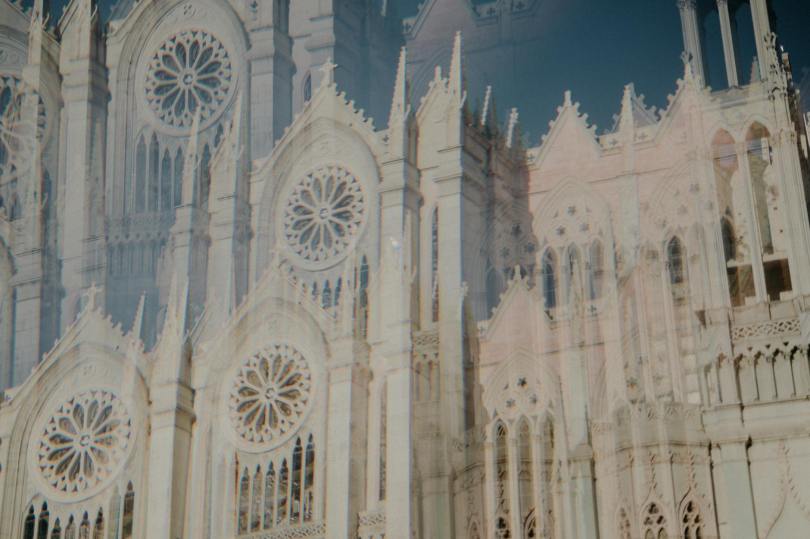
There’s this cathedral in my head I keep
making from cricket song and
dying but rogue-in-spirit, still,
bamboo. Not making. I keep
imagining it, as if that were the same
thing as making, and if as making might
bring it back, somehow, the real
cathedral. In anger, as in desire, it was
everything, that cathedral. As if my body
itself cathedral. I conduct my body
with a cathedral’s steadiness, I
try to. I cathedral. In desire. In anger.
Light enters a cathedral the way persuasion fills a body.
Light enters a cathedral, the way persuasion fills a body.

Source: Star Map with Action Figures (Sibling Rivalry Press, 2019)


Generative Questions from “And If I Fall” by Carl Phillips
- What verbs belong to you as poet? What poems can you write under the title “And if I [verb]”?
- What concrete object / thing / place—like Phillips’s cathedral—do you have in your head (or some other part of your body) that you keep making?
- What do you make it from? Take this as a title: “I Make the [x] in My [y] From [z].”
- What abstractions belong to this making? (for Phillips: desire and anger)
- A more general question: what abstractions belong in your poems?
- On what topics do you contradict yourself, as Phillips does in line four?
- What noun can you, and only you, claim as a verb, as Phillips does “cathedral”?
- What lines belong to you that you can get away with repeating, perhaps with a slight variation? (as Phillips does in the last two lines of this poem)
- Write a list of five phrases using Phillips’s syntactical patterns in lines 2-4 but with different words. Which of these can you take as a title for your next poem?
Molly Spencer is the author of three prize-winning poetry collections: If the House (University of Wisconsin Press, 2019), Hinge (SIU Press, 2020), and Invitatory (Parlor Press, 2024). Her poetry has appeared in Blackbird, FIELD, New England Review, Ploughshares, Prairie Schooner, and elsewhere. Her critical writing has appeared at Colorado Review, The Georgia Review, Kenyon Review, The Writer’s Chronicle, and The Rumpus, where she was a poetry editor from 2016 to 2024. She teaches writing at the University of Michigan’s Gerald R. Ford School of Public Policy.
 Moist Poetry Journal