National Poetry Month: Prompt 29, from Susan L. Leary

Working in the spirit of Krysten Hill’s “Nothing,” write a poem built around a single word. This can be a word you love or are in awe of, one that challenges or eludes you, one you fear or find comforting, one you hear too often or too little, one you simply cannot shake. Whatever you decide, let this word be your anchor, what you keep circling, interrogating, and reimagining. Consider how Hill treats “nothing” as a site of accumulation: a pressure point, a negligence, a curiosity, a means for connection, a word that means something different depending on who speaks it. As you write, allow your word to become equally layered. To speak, to change shape, to teach or surprise you, to reveal its many rooms. 

Here’s the link to the poem: https://poets.org/poem/nothing


Susan L. Leary (she/her) is the author of SENTENCE (Nine Syllables Press, fall 2026), selected by Eugenia Leigh as the winner of the Nine Syllables Press Chapbook ContestMore Flowers (Trio House Press, February 2026); and Dressing the Bear (Trio House Press, 2024), selected by Kimberly Blaeser as the winner of the Louise Bogan Award. Her poetry has appeared or is forthcoming in such places as Indiana ReviewNorth American ReviewThird CoastCream City ReviewSmartish PaceThe Arkansas International, and Verse Daily. She holds an MFA from the University of Miami and lives in Indianapolis, IN.

National Poetry Month: Prompt 28, from Erin Vachon

This week in a writer group chat, I mentioned Haruki Murakami’s famous–if strangely quiet–origin as a novelist. Murakami claims he saw a baseball player hit a double at a game and something inside him shifted–at that moment, he knew he was supposed to write a novel. My group chat exploded into writer origin stories of our own, all absolutely fake, yet fabulous.

Today write your speaker’s (faux) origin story as a poet. Of course, feel free to lean sincere if you’d like, exploring their history quietly. But I encourage you toward the strange, writing a speaker whose voice clicks into being at an unexpected moment. Murakami saw a baseball fly across the sky and everything changed. When and where will you locate your origin story? Is it a fixed event, a recurrence, or something else entirely?


Erin Vachon is the Senior Reviews Editor at SmokeLong Quarterly and the Multigenre + Chapbook Editor for Split/Lip Press. They are on the English Department Adjunct Faculty at Rhode Island College and live outside Providence, Rhode Island.

National Poetry Month: Prompt 27, from Amorak Huey

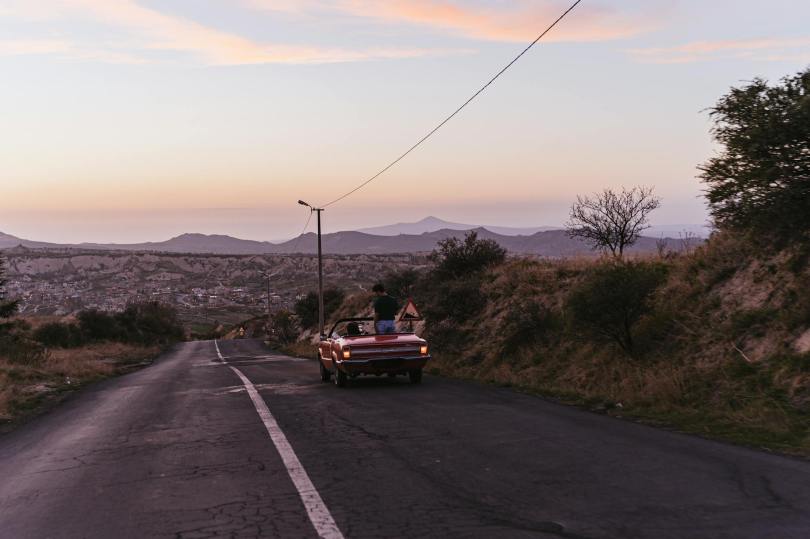
Road Trip as Liminal Space

Content: Write a poem that takes a road trip or that takes on the road trip: the peculiar intimacy of the inside of the car, the intenseness of the company in such close quarters, the openness and possibility of the road itself, the in-betweenness of the experience. The way time blurs. The journey, the destination, the place left behind. 

Form: Make it a prose poem, but resist narrative. Shake up chronology. Avoid the expected here-to-there progression of a road trip. Let your sentences blur, one into the next. Let your syntax reflect the liminality, the on-the-way-ness of the journey.


Amorak Huey is co-editor of River River Books and author of Mouth, newly out from Cornerstone Press. He has written a lot of road trip poems.

National Poetry Month: Prompt 25, from Pam Yve Simon

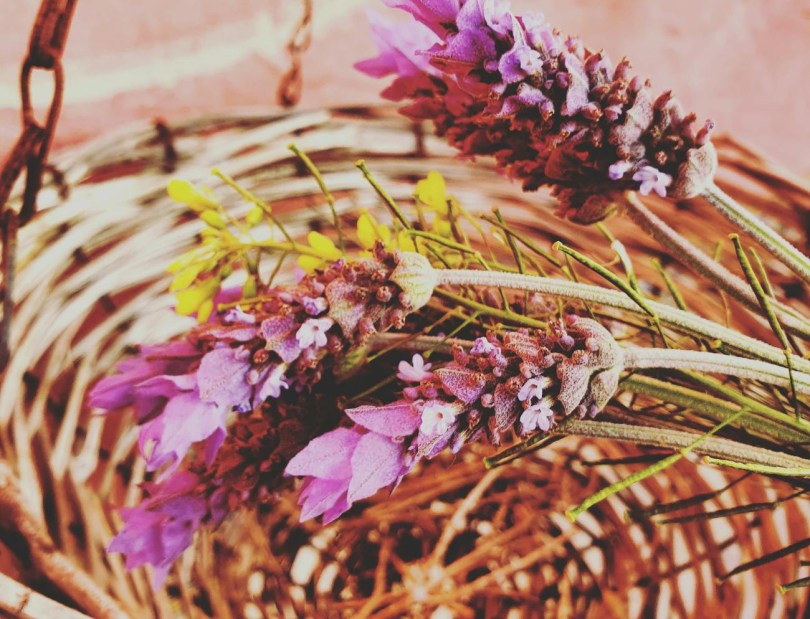
Create a sensory nest out of any sense other than touch and find somewhere tangible to place it. For instance, weave a nest out of the dulcet sounds of your grandmother’s laugh and place it on your nightstand or craft a nest out of the jasmine scent of your best friend’s signature perfume and use it as a holder for your engagement ring. 


Pam Yve Simon (she/her) earned her bachelor of arts in English and American literature from New York University. Her writing has appeared in print and online publications, including Analog Science Fiction & Fact, Small Wonders, Moist Poetry Journal, and The Daily Drunk’s Marvelous Verses anthology. Her photography has appeared in FERAL, Kissing Dynamite, and Acropolis Journal. Say hi to her on Bluesky Social @PamYve or visit https://pamyve.wordpress.com/

National Poetry Month: Prompt 24, from Dusti RW Levy

Dream Obituary Prompt

This prompt came from a dream where my sibling and I discovered a Wikipedia article about our dad.

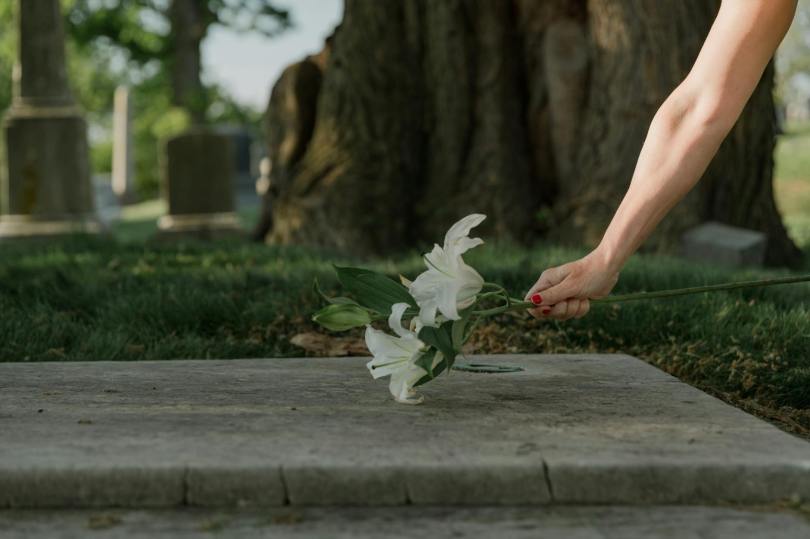
In a dream, you discover a Wikipedia article/a text about someone who has passed/a species that no longer exists/an unknown science phenomenon. What do you discover, and how do you process it through poetry?

Editor’s note: read about the funeral Iceland held for Ok glacier in 2019.


Dusti RW Levy (they/them) writes about love, longing, grief, and ghosts from the Louisiana prairie. They are the founder and editor of delicate emissions poetry zine, on the staff of Thirteen Bridges Review and The McNeese Review, and an MFA/MA student in poetry at McNeese State University. 

National Poetry Month: Prompt 23, from Kasey Jueds

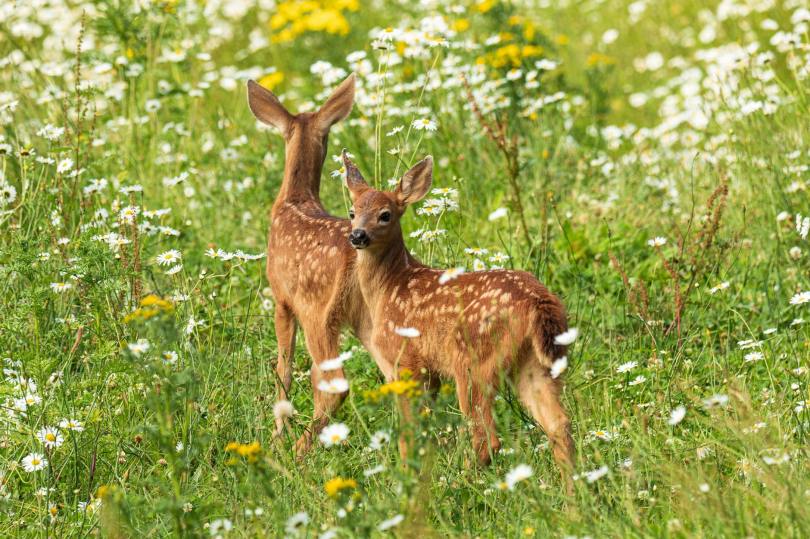
“I can’t regret my actual life,” Anne Haven McDonnell writes in “The Baby Deer” (second poem on page), her beautiful and tender poem of the more-than-human, of mothering and not-mothering, intimacy and distance. Write about something you don’t regret, then something you do. Then write into what these two things have in common—where do they overlap, share edges, speak to each other?

OR

Write about something you regret, then write into how this regret might be healed, even if it seems un-healable. Feel free to leave the realm of what seems possible—what magic could you call on, what would you need (objects, beings, events) to remake the regret into something mended and whole?

Poem link: https://aboutplacejournal.org/issues/the-more-than-human-world/communion/anne-haven-mcdonnell/


Bio: Kasey Jueds (she/her) is the author of two collections of poetry, both from the University of Pittsburgh Press: Keeper, which won the 2012 Agnes Lynch Starrett Prize, and The Thicket. She lives in the mountains of New York State.

National Poetry Month: Prompt 22, from Violeta Garcia-Mendoza

Open Tab Cascade Prompt

Write a poem collaging phrases found within the open tabs of your internet browser,
Substack, email app, texts, or any other open windows on your computer or smart
phone.

For an extra challenge, embrace echoes and repetition by loosely following the cascade
form (diagrammed below and further explained here).

A
B
C
D

a
b
c
A

d
e
f
B

g
h
i
C

j
k
l
D

The below poem is from Violeta Garcia-Mendoza’s poetry collections SONGS FOR THE LAND-BOUND (June Road Press, 2024), and exemplifies the above prompt and cascade form.

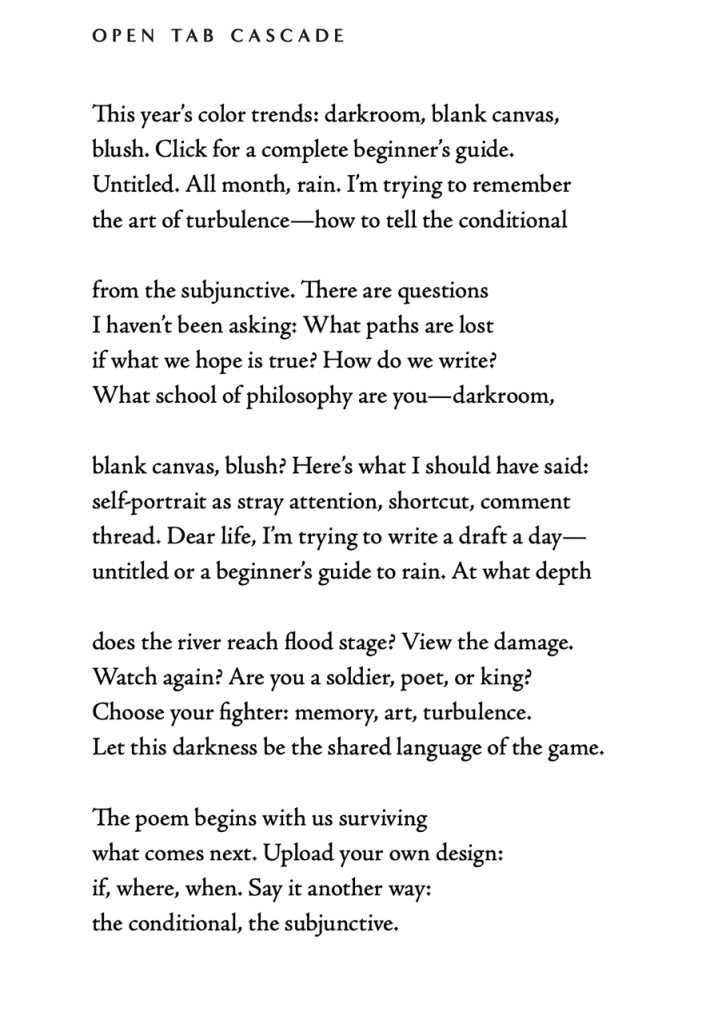
OPEN TAB CASCADE (poem by Violeta Garcia-Mendoza)

This year's color trends: darkroom, blank canvas, blush. Click for a complete beginner's guide.
Untitled. All month, rain. I'm trying to remember the art of turbulence—how to tell the conditional

from the subjunctive. There are questions I haven't been asking: What paths are lost if what we hope is true? How do we write?
What school of philosophy are you-darkroom,

blank canvas, blush? Here's what I should have said: self-portrait as stray attention, shortcut, comment thread. Dear life, I'm trying to write a draft a day— untitled or a beginner's guide to rain. At what depth

does the river reach flood stage? View the damage.
Watch again? Are you a soldier, poet, or king?
Choose your fighter: memory, art, turbulence.
Let this darkness be the shared language of the game.

The poem begins with us surviving what comes next. Upload your own design: if, where, when. Say it another way: the conditional, the subjunctive.

Violeta Garcia-Mendoza is the author of Songs for the Land-Bound  (June Road Press, 2024)— a 2025 National Indie Excellence Award finalist, 2025 Eric Hoffer Award honorable mention, and 2025 First Horizon Award finalist. In 2022, she received a grant from the Sustainable Arts Foundation for her poetry. Violeta’s work has appeared in Sugar House Review, The Dodge, RHINO, SWWIM, Psaltery & Lyre, and elsewhere. Her poem “Hiking Moraine State Park” was recently featured on an episode of The Slowdown, chosen by Maggie Smith. Violeta lives with her family on a small certified wildlife habitat in suburban western Pennsylvania. 

National Poetry Month: Prompt 21, from Han VanderHart

Write a catalog or list poem that meditates on a color and an emotion experienced throughout the day—blue and joy, yellow and grief, red and satisfaction, pink and flirtatiousness—without using the name of the color or emotion in the body of the poem.

Alternatively: disobey the prompt, and name the color and emotion. But maybe try it first without naming. And read Mary Ruefle’s poem “YELLOW SADNESS” below.

YELLOW SADNESS by Mary Ruefle

Yellow sadness is the surprise sadness. It is the sadness of naps 
and eggs, swan’s down, sachet powder and moist towelettes. It
is the citrus of sadness, and all things round and whole and dying
like the sun possess this sadness, which is the sadness of the
first place; it is the sadness of explosion and expansion, a blast
furnace in Duluth that rises over the night skyline to fall
reflected in the waters of Lake Superior, it is a superior joy and
a superior sadness, that of revolving doors and turnstiles, it is
the confusing sadness of the never-ending and the evanescent,
it is the sadness of the jester in every pack of cards, the sadness
of a poet pointing to a flower and saying what is that when what
that is is a violet; yellow sadness is the ceiling fresco painted
by Andrea Mantegna in the Castello di San Giorgio in Mantova,
Italy, in the fifteenth century, wherein we look up to see we are
being looked down upon, looked down upon in laughter and
mirth, it is the sadness of that.

from My Private Property (Wave Books, 2016)

Han VanderHart is a queer writer living in Durham, NC and the editor of Moist Poetry Journal. They are the author of Larks (Ohio University Press, 2025), winner of the 2024 Hollis Summers Poetry Prize, the chapbook Hawk & Moon (Bottlecap Press, 2025), and What Pecan Light (Bull City Press, 2021), and have poetry and essays published in Poetry Daily, Kenyon Review, The American Poetry Review, Poetry Magazine, Poetry Northwest, Prairie Schooner, Poet Lore, AGNI, and elsewhere. Han hosts Of Poetry Podcast and co-edits River River Books.

National Poetry Month: Prompt 19, from E.G. Cunningham

Collapsing the Phenomenal: An Incredibly Rad and Deceptively Simple Prompt for Poets 

1.     Go outside. 

a.     If you’re unable to go outside, find the nearest window. 

b.     If there is no window, conjure a window in your mind. 

2.     From your place outside, or at your literal or conjured window, observe the following:

a.     sights

b.     sounds

c.     smells

d.     taste

e.     touch

3.     Comingle these sensory impressions with the other thoughts and feelings that you’re experiencing, such that the flash of a cardinal’s wing becomes fused with the thing your beloved said yesterday, or the sound of branches in the wind sits next to your worry about what life holds for you next week. The goal here is juxtaposition, and, via juxtaposition, the unexpected, the unified field, time travel. 


E. G. Cunningham was born in South Carolina and grew upin Italy and Florida. She is the author of the full-length poetry collections Field Notes (River River Books, 2025), Ex Domestica (C&R Press, 2017), and two chapbooks, Apologetics (FLP, 2017) and Oranges for Venus (Tilted House, 2024). Her work has appeared in The Abandoned Playground, Colorado Review, The Gettysburg Review, The Nation, Poetry London, The Poetry Review, Puerto del Sol, Southern Humanities Review, ZYZZYVA, and other publications. She holds an MFA in Creative Writing, Poetry from the University of Iowa Writers’ Workshop, and a PhD in English Literature and Creative Writing from the University of Georgia. Read more about her writing and music at egcunningham.com.

National Poetry Month: Prompt 18, from Adrian Dallas Frandle

Ask Green Anything  

I’m currently working on a manuscript where I interview different parts of my body and let them speak. This got me thinking that more of our world deserves to be heard on its own terms. Since the green is greening hard in my part of the world right now, why not interview objects of that emblematic hue? Here’s how: 

  1. Pick any green object from your surroundings: leaf, grass, shirt, verdigris statuette, kid snot, yogurt lid, etc. This is now your interview subject and also your title: “I Interview [X]”.
  2. Write down 3 basic questions for your subject about what it’s like being green. (e.g. “Are you jealous of red?”; “Is it easy being green?”; “What is money to you?”) 
  3. Ask your subject the questions and carefully record their responses. Try to voice the replies in the form and manner of the chosen subject. (e.g. From a green statue: “Red has nothing on me. She could never sit still this long” or from a blade of grass: “Being me is an easy reaching for light.”). 
  4. You should now have 3 questions and their accompanying responses for your poem. Use the first line to set the scene of the interview, like a good news broadcast. (e.g. “Here I am at the local public library speaking today with Alex’s hunter green sweater.”)
  5. The rest of the poem should alternate between the questions and the green subject’s responses. Feel free to leave the poem in the interview/dialogue Q&A form. Bonus points for rendering an enticing interview – maybe the subject walks out in a huff, or perhaps the subject flips the question back on the interviewer (“Actually, no, that’s not the truth, Ellen…”). Because green loves to linger, try to make the poem at least 10 lines long. Go wild! 

Adrian Dallas Frandle (he/they) is a poet, editor, educator, & former chef. “Book of Extraction: Poems with Teeth” was published in 2023 by Kith Books. Recent work featured in Poet LoreHoney Literary, HAD and elsewhere. Adrian also pens a monthly poetry column for the local paper The Stratford Crier. Read more at adriandallas.com