“I was a child, all body.” by Tara Burke

It was always the mountain
and me. Paris Mountain.
The woods were mine:
tree tops, rocks, creeks,
space between. I topped
for the first time on leaves
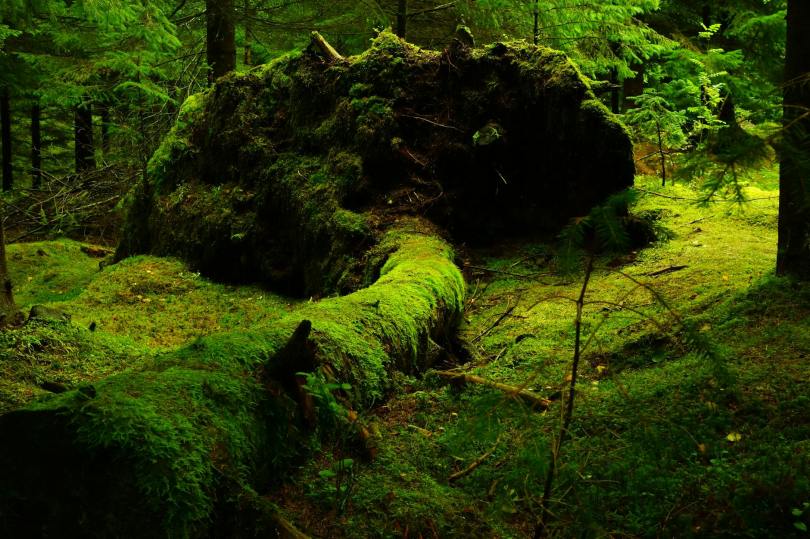
straddling felled trees.
The way they laid across
space, over huge limestone,
and moss, rocks begging me
to shimmy across. I laid
on my belly, wrapped
my young arms and legs
around her girth. I couldn’t
reach my own fingertips,
pressed into the rough bark,
pressed my ear too, so I
could hear her breathe.
This was around the time
my pelvis had a body
of its own, my pubic bone
close to anything at all
and a rhythmic rocking
took over. I let myself
be all pelvis, all fingers
and ears, all torso and legs
and tongue. I was a child
who’d pressed herself
into many things but
the forest took me in.
I came alive, moaned
like an animal, looked
around. Was it me, or this
tree? Or the wild, how it
always seemed to see?
Alone, usually, but not
here. She, the trees. She,
the mountain. She, the space
between my sound and hers.
We came up together, I learned
my body, she taught me what
it is to be alive, how to be a wild
beast on this blue green earth.


Tara Burke is from Paris, Virginia and teaches at VCU and the Visual Arts Center of Richmond. Her poems were recently published in Screen Door Review, Shenandoah Literary, Khôra, and Southern Humanities. Lately, she’s absorbed in making shorter, surreal love poems, speculative stories, handmade quilted things, and clay houses.

“108 degrees, honey” by Thanh Bui

there will still be humans, my lover says 
though we might not be included in that.
our kind isn’t just going to die out immediately,
to which i envision the skin of the ones who’ll
live. visit a Titanic museum—to predict which
persons will survive, you’d need to know their
statuses. an iceberg does not discriminate, nor do
fires, but people? we aren’t natural. did you know
the world is running out of sand? we’re not even
wealthy enough to know what to hoard, to hide.
for now, i can get water whenever, i am rich with
someone else’s thirst. our guide this summer
was from Quảng Trị, & didn’t know of electricity
until 2004. while he used candles, i moused
computers, i watched tv. during covid, i witnessed
my relatives pray for the vaccine already in my body
waters away. watching is another kind of pain.
that’s why they use it as torture, too. what’s as
un-human as having no power to change what’s
in front of you? bó tay as it all sinks. is it a good
thing i don’t know what species we’ve lost? which
cats are the last of their kind? my phone keeps
turning off, says it’s too hot to function. the summer
construction workers have a tip: turning off the AC
in their homes an hour+ before work helps them
acclimate to the heat. elsewhere, they’ve invented more
ways to survive. but we are a country of litigators.

Thanh Bui was born in Gò Vấp and raised in Dorchester & Alief, and is a writer & actor based out of Austin, Texas. She loves constantly.

“Band Camp” by Millie Tullis

There were jokes.
When I put my clarinet reed
in my mouth (fourteen
and C-cupped) I was told
I had a cute sucking face.
But Band Camp was clean.
Mostly Mormon kids.
Mostly nerds. Almost half
never-been-kissed-kids.
Not literally clean.
Across from the football
field the college dorms
we slept in stank.
Boys’ apartments north
of the parking lot.
Girls’ south. Four
to a room two
to a bed. We braided
each girl’s hair into
increasingly complex
patterns. We sweated.
The baby hairs curled
against our foreheads.
Volunteer parents cooked
family reunion meals
in the parking lot where
our two genders met and filled
paper plates. We ate
along the lot’s edges.
We perched on concrete
curbs. I played the clarinet.
I marched. Then
I played the tenor
saxophone and marched.
I liked being the only
girl carrying a sax.
I carried the reed
with just my bottom lip
and a little teeth. At fourteen
I liked being called girl.
I liked sleeping by a girl
in the dorm of girls.
I offered to turn her hair
into a chestnut crown.
I did not like playing
the clarinet or the sax.
I liked being in it.
I worked to keep
my small piece
of wood wet
play some notes right.
My job was to not
disappoint.
I liked marching.
I liked being a point
of the straight line.
I could almost step
without sound.
I knew where to
stand and I knew
where I was.

Author’s Note: I attended my younger sister’s viola recital early this summer. While listening to her perform, I thought about the role music played in my life when I was younger and jotted down the start of this poem. When I was a teenager in marching band, my relationship to music was simultaneously quotidian and erotic, a chore and a gift. For me, the marching band’s body-heavy work revolved around a week-long summer band camp, where we communally ate, slept, practiced, played, sweated, marched.

Millie Tullis (she/her) is a writer, teacher, folklorist, and researcher. Her work has been published in Sugar House Review, Rock & Sling, Cimarron Review, Ninth Letter, and elsewhere. Millie is EIC of Psaltery & Lyre, an online literary journal. Raised in northern Utah, she lives in upstate South Carolina.

“Ten Minutes Before Closing” by Shannon K. Winston

       Inspired by “The scent of the archive” website, City of London

An archive smells like licorice, a faint cigar,
bergamot. Some might think of a butcher shop or
cat urine when leafing through yellowed papers.
Dust is skin, is horsehair, is struggle, is stymied desire.
Even almond-like odors linger in parchment.
Faint embers nestle into unsuspecting letters.
Goji berry? Rose? Reader, what do you smell? Tired leather,
hints of cocoa and earth. The breakdown of
iron gall ink is burnt and sugary sweet.
Just how many odors does an archive contain?
Kneel in an aisle, if only for a minute, lean in,
listen— do you feel the tingle of the archive within the archive?
Make room for taste, touch, smell swelling in, around, within the records.
No one told you, guest, patron of this place.
Open the book before you. Walk through wild mushrooms,
patches of tomatoes, and wet grasses. Stop taking notes.
Quiet overtakes you again and you smell an odor you can’t quite name
rippling between your hands. Yes, yes—you’re a child in the kitchen,
sourdough starter sticks to your hands. You want to shake it off.
Try as you might, it clings to you. The scents of the archive are like this.
Uncertain, you linger. You’ve forgotten why you’re there.
Vixen, confidant, hoarder—the archive slips under your skin.
Without a word, a woman in a picture book holds out a suitcase to you:
xylophones, violins, flutes. Beautiful music, she says. You can’t hear it.
Yes, yes, she insists. Listen harder, every smell has a sound.
Zinnias swell like yeast in the dark. The librarian has turned off the lights.

Author’s note: Archives have always fascinated me—they hold so many wonderful stories and mysteries. In writing this poem, I was inspired by the article “The scent of the archive” published by the City of London, which discusses the different types of smells one might encounter in an archive. I fleshed out some of those details in this poem by imagining myself into that space. The abecedarian form (where the first line of the poem begins with the letter “A” and each line thereafter begins with successive letters of alphabet) allowed me to explore the expansiveness of my imagined archive formally, as well.   

Shannon K. Winston is the author of The Girl Who Talked to Paintings (Glass Lyre Press, 2021) and The Worry Doll (Glass Lyre Press, forthcoming). Her individual poems have appeared in Bracken, Cider Press Review, On the Seawall, RHINO Poetry, and elsewhere. She lives in Bloomington, IN.

“Knee High by the Fourth of July” by Amorak Huey

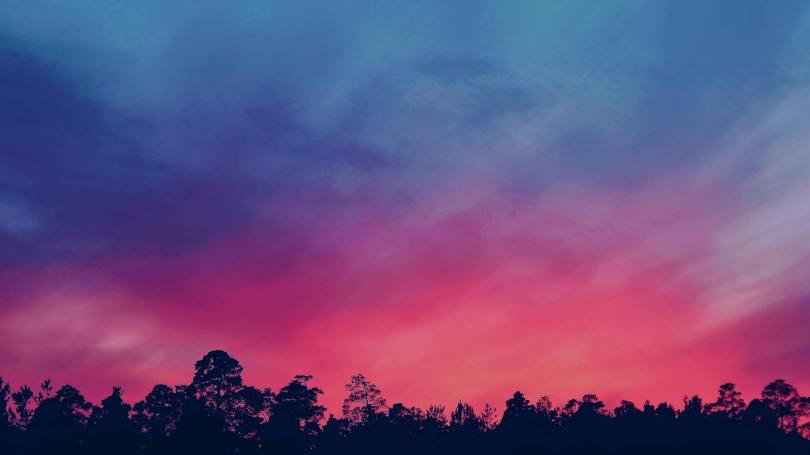
I’m driving through the pinkness of an Ohio sunrise
where everything around me is Ohio
bathed in pink light & somehow
looks exactly like the Ohio
someone who has never been to Ohio
imagines Ohio to be & the cornfields
are just where they should be
this time of year. This is how life goes:
every moment a simulacrum of itself,
every season on a loop
back toward itself, every place
a snowglobed version of that same place,
nothing so unique as we’d hoped,
not even love. I’m driving
neither toward you nor away.
The distance between us holds steady.
It’s amazing we found each other in the first place —
think how a bee carries pollen
from one singular tiger lily
on the side of a highway in Ohio
to another a mile away, or miles,
& for the rest of their time blooming on this planet
those two flowers are swollen with each other,
the possibility of each other,
& that possibility, it turns out, is enough
to sustain all of it — each stem, pistil, petal
stretching open each morning
to drink deep the pink-lit dew.

Author’s note: I moved to Ohio, of all places, a year ago. Moving at this age (I’m older than I think I am) has me thinking about distance and disconnection, about toward and away, about what we carry with us. Our kids are suddenly out of the house. Someone else lives in the house where they grew up. None of this has anything to do with this poem, or it has everything to do with the poem. Since the move, I’ve been trying to pay particular attention to Ohio, to what Ohio looks like, to what Ohio represents in my life — I think this is a way of holding on. It’s a kind of love.

Amorak Huey is author of four books of poems including Dad Jokes from Late in the Patriarchy (Sundress, 2021). Co-founder with Han VanderHart of River River Books, Huey teaches at Bowling Green State University in Ohio. He also is co-author with W. Todd Kaneko of the textbook Poetry: A Writer’s Guide and Anthology (Bloomsbury, 2024).

“in which the houses don’t change” by Nat Raum

After “400 Lux” by Lorde


i should have been driving east
this whole time, lavender shadows
and guava highlights emerging
from the landscape as i barrel, hollow
but brave, through suburbia in my civic
and flimsy pink sunglasses. i used to
glide north or south through lush
greens swaying to the prelude
of an evening storm, pressing on
faster than i should to stay beneath blue,
beneath the blending of bisexual lighting
before my very eyes. i should have
seen the sunset like this, driving
further from an active horizon through
a smattering of vinylclad houses
set on crew-cut lawns, stoic
and imposing. i could never call it
my life, model homes fabricated
to be spread out across an old farmstead.
i could only envy its idylls, flamingo
and lilac spots in the sky shifting as i find
a new gear on the road winding east
from my parents’. the quiet roars around me
and i wonder where else i can find this.

Author note: This poem is inspired by a specific stretch of road in Baltimore County, Maryland and the way the houses and trees look when the sun is setting in the summer. I imagined what it would be like to photograph the light and feed it through these pastel-toned Lightroom filters I downloaded a while back, and then it became this piece.

nat raum is a disabled artist, writer, and genderless disaster based on unceded Piscataway and Susquehannock land in Baltimore. They’re the editor-in-chief of fifth wheel press and the author of the abyss is staring back, random access memory, camera indomita, and others. Find them online at natraum.com.

Three Poems by C.M. Green

Some Things are Inextricable

The rush of June returns and
once more it’s time
things of beauty spill out of my
mouth like pebbles like teeth
tiny and perfect and I’m only
three years removed from
psychiatric
hospitalization

but I want a prettier word, a neater phrase, something like

revivification
or
the continental divide

Two years ago the first anniversary coincided with my first
dyke march and I peeled away from the crowd to buy
myself pizza and think how it felt to be a dyke and be alive.
In the hospital I read brideshead revisited and it brought
me to life when little else would. I had recently shorn my
head of hair and kissed a girl for the first time and I was
still a woman but I was not very good at being one. Oh well

June will soon cease to signify
madness for me, I’m sure,
give it a year, two, three—
I once thought I’d never look at
my niece without remembering
how I lay on a hospital cot
for her first days, but
now she’s a person all her own.

From the Amtrak between Ashland and Richmond

Virginia is for lovers, a truth that stretches
from the appalachian corner to the peninsula
where I went mad and saved myself from madness.

You can tell me other states have trees, but
I don’t think they have trees like this—on the amtrak
to richmond I remembered what capacious love is,

and to spit truth in my hands and rub it together
I would have to say that this is home in a way
that boston can’t be.

On the james river I leapt from rock to rock
with my best friend who has asked me to
perform her wedding. Capacity, as a quality

of being capacious. The mountains here are
just better, sorry, than any others, because
they remind me of truth as love, as vast

as any ocean—and we have that too,
on the other side, chesapeake bay and atlantic
saltwater, and I grew up knowing that

this is where my bones will be buried.
The Last Summer I Believe We Will Ever Have

Kiera tells me the humidity in Boston is like
being inside a mouth and that
their IMPORTANT PAPERS are DISSOLVING!
And, I read about becoming a citizen archivist
because soon the boot will come for the face
of anyone whose art expands possibility.
And, Vickie says we should go to the beach soon.
And, I have central air in my new apartment
which I feel a tiny amount of shame about.
And, my mother talks about the supreme court
while my senator calls for court packing
while others claim victory and threaten revolution.
And, revolution doesn’t sound so bad at this point,
but not the one they’re talking about.
And, I miss Virginia like a lover.
And, Meadow and I went swimming
in the james river, just two
trans kids enjoying the rapids.
And, I want to move
to Richmond every time I visit.
And, summer makes me remember strawberries—
in childhood dusted with sugar, in adulthood soaked in vodka.
And, forty-thousand people have been murdered in Palestine because
the thing I won’t call my country will not stop sending bombs.
And, I don’t know how to keep writing.

Author’s note: I wrote these poems in the summer of 2024, which to me feels like the very last summer before something. I don’t know what. I spent the first week of July traveling between Massachusetts and New York and Pennsylvania and Virginia, seeing family and beauty at every stop, and as I travelled I wrote about the place of art in the face of rising fascism and genocide. The Supreme Court made some bad decisions. My three-year-old niece became my best friend for two days. I saw every one of my four siblings, and I saw my high school best friend for the first time since 2019. The news talked about the rise of the right in Europe. I visited my 95-year-old grandmother and brought her farm-grown plums. My mom watched a lot of MSNBC. And always, since October, Palestinian people are being murdered by Israeli forces and American weapons. How to write in the face of all this? How to reconcile the love in my life with the hatred in the world? Poetry is the place I have turned to to work through these questions, and these poems are the result.

C.M. Green is a Boston-based writer with a focus on history, memory, gender, and religion. Their work has appeared in Full House Literary, beestung, and elsewhere. They stand for a free Palestine, and encourage you to find tangible ways to do the same. You can find their work at cmgreenwrites.com.

“Pond Life” by Glenis Moore

The pond is calm today.
Its surface a glassy mirror
for the bright blue of the summer morning.
Leaves of water bistort dot the surface:
lie lows for the adventurous ladybirds
voyaging to the foreign land
beneath the shade of the bay tree.
Lime green duckweed tries to clump
where the sun bakes the water
but the water snails love to graze
in the slack heat while
the frogs doze in the silent depths
with the detritus of last year's blooms.
A newt turns beneath a leaf
and is gone, its yellow belly
echoing the golden dandelions
at the pond's rim as a soft breeze
ripples the water's face just enough
to disturb the pond skaters
and I look up to see
the pin prick of a skylark
in the brazen sky.

Author’s note: Our garden pond is small and yet it seems to attract frogs, newts, dragonflies, damselflies plus a host of other insects. It is also my sanctuary from the world’s madness where I can breathe and slip into the wild. On a warm calm day, such as the one in the poem, it reminds me that we are only one small cog in a vast array of beautiful wheels.

Glenis Moore is a relatively new writer working in the flat lands of the Fens near Cambridge, UK. When she is not writing she makes beaded jewellery, knits, reads and runs 10K races slowly. She has been previously published by Dust Poetry, The Galway Review, Infinity Wanderers and Cosmic Daffodil.