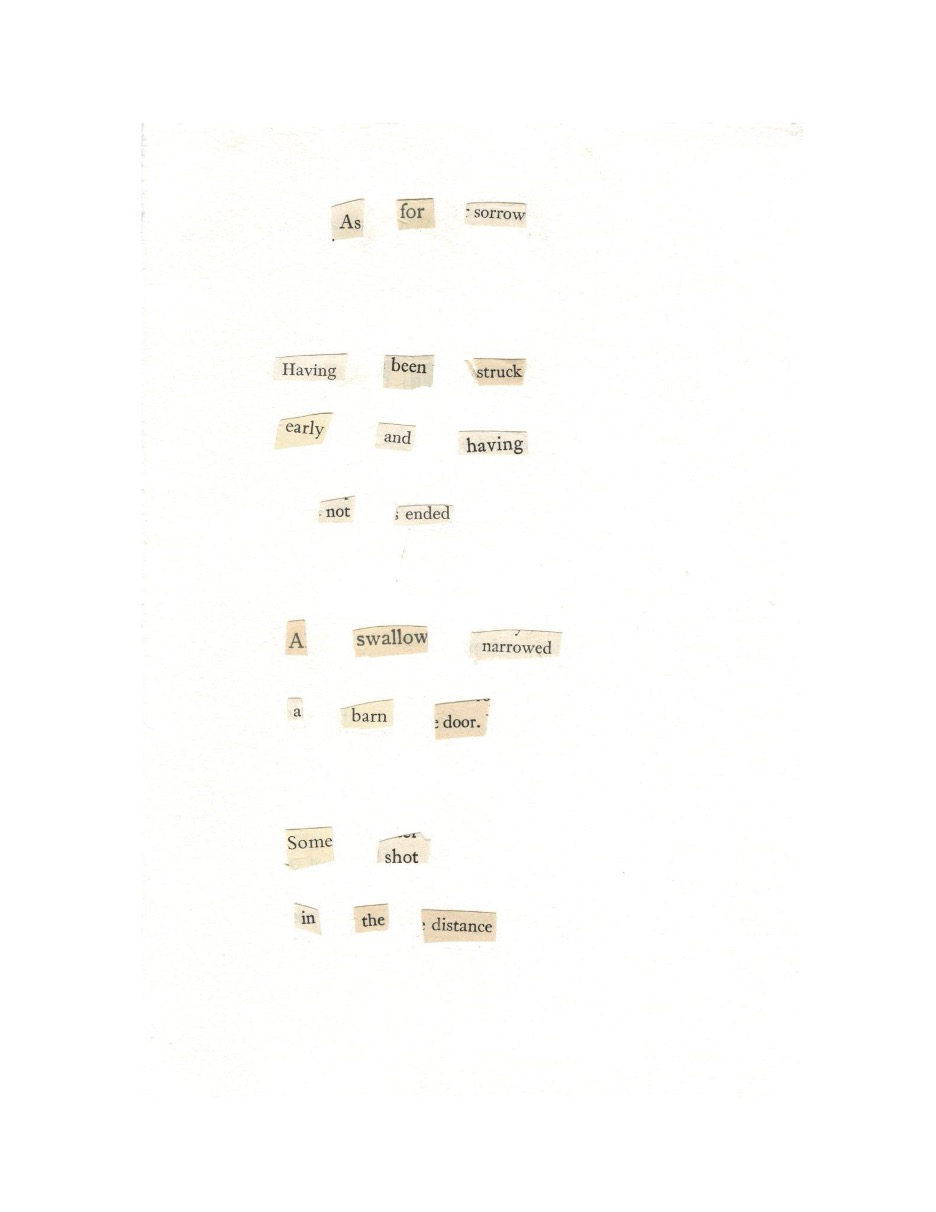

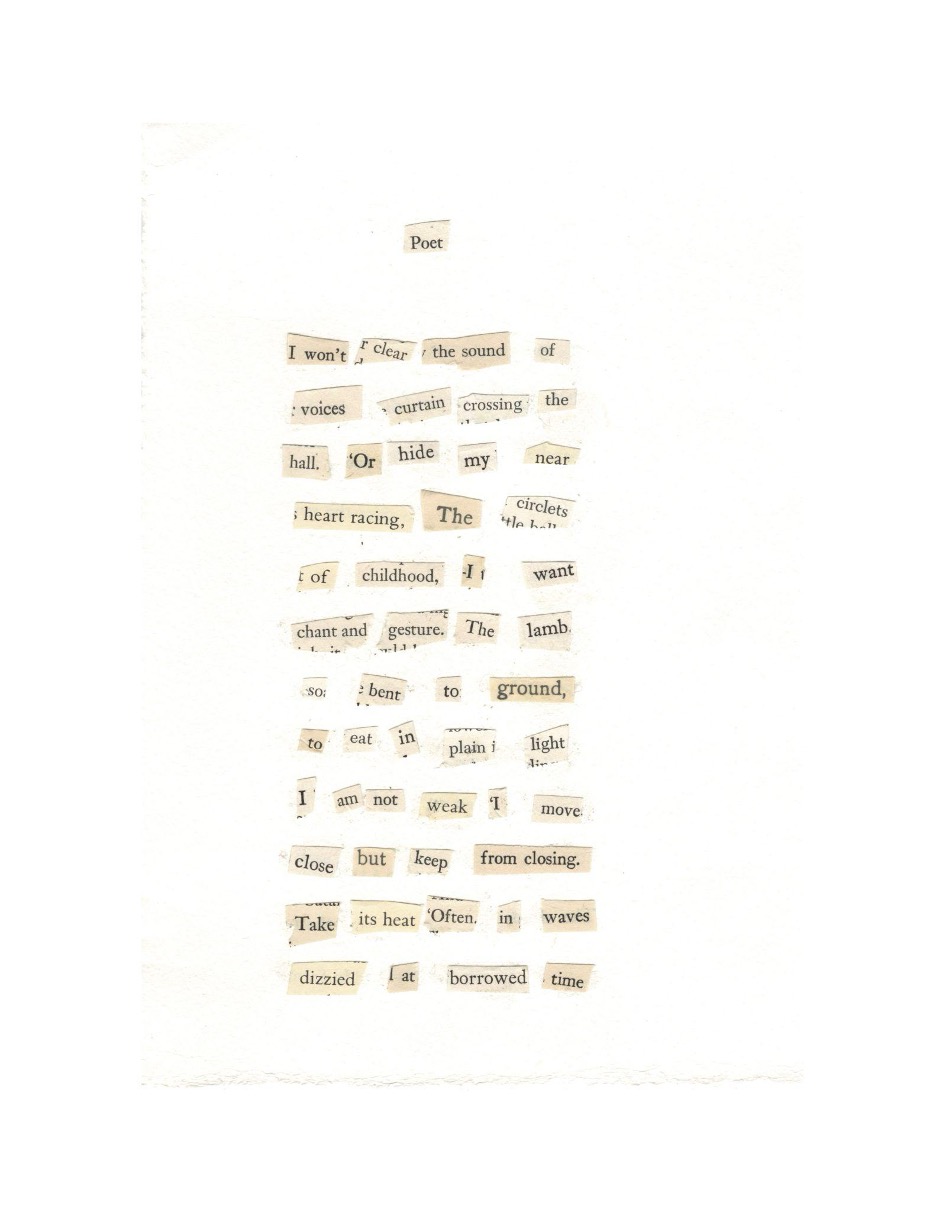


Liane Tyrrel is a poet and painter. Her poems have been published or are forthcoming in Poetry Northwest, Image Journal, and Four Way Review among others.
Liane Tyrrel is a poet and painter. Her poems have been published or are forthcoming in Poetry Northwest, Image Journal, and Four Way Review among others.
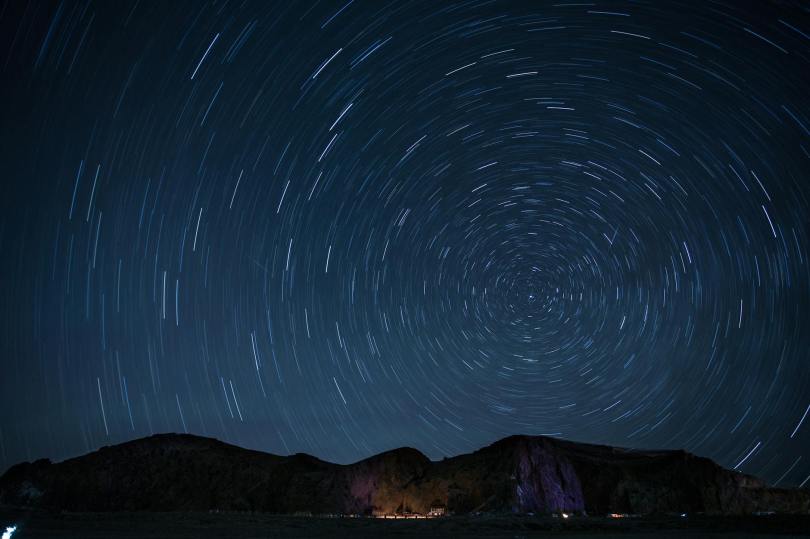
                   – after “It is essential… to undertake
                   the reconstruction of the primordial Androgyne
                   that all traditions tell us of… within ourselves.”
                   André Breton & Androgyne III
                   (1985, Magdalena Abakanowicz)


as if these definitions –

she and him, she and her,
he and him, they and
her, they and him, they
and them, she, they, him

– weren’t enough, the dark
blurs of who, what, and why

coil their supple excesses
through the night hours
and behind walls – when
the heart only

knows the heart
Sam Rasnake is the author of Fallen Leaves (Ballerini Press, forthcoming), Cinéma Vérité (A-Minor Press) and Like a Thread to Follow (Cyberwit). His works have appeared in Wigleaf, Stone Circle Review, Anti-Heroin Chic, UCity Review, Best of the Web, Southern Poetry Anthology, and Bending Genres Anthology. Follow Sam: Bluesky @samrasnake.bsky.social.
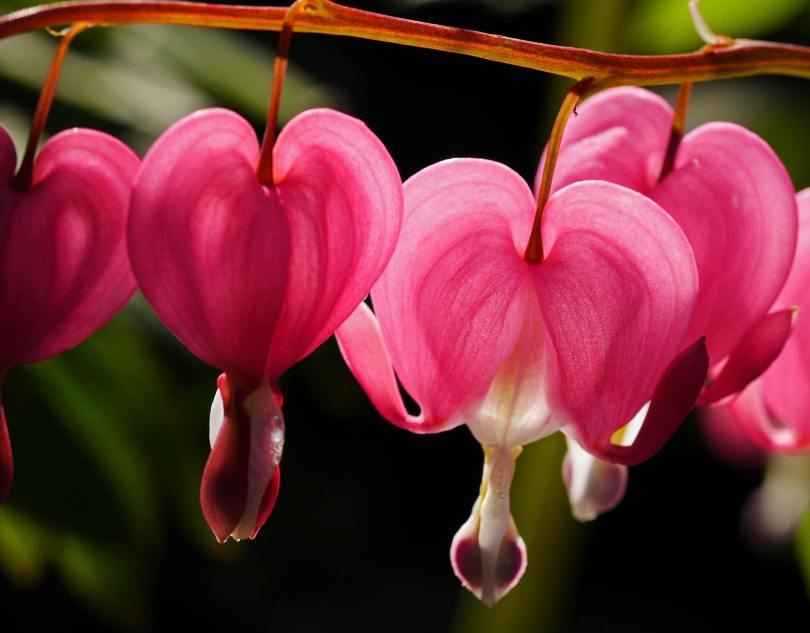
Someone said hurdy gurdy heart
so of course I thought accordion heart,
vuvuzela heart, calliope heart.

Hello, heart, I say as it knocks
on my door.  What have you been
up to? Oh nothing much, says
heart, achingly.

We have broken much together,
heart and I, and yet we still
do not know each other
very well. I offer my kazoo.

Heart declines. Pulls out
a blues harp, says,
shut up them damn birds,
I got something to say.
Kyla Houbolt is a poet and gardener living in North Carolina, USA. “Shopping Music for the Gods” will appear in her full-length selected and new poems, Becoming Altar, forthcoming from Subpress in autumn 2025.

The sun setting over the Wellsville mountains and the clouds roaring pink.
Tulips unclenching in the bedroom vase.
A hot bowl of cheesy shrimp-n-grits, a taste I almost missed.
The wretched face of the beautiful man who called 9-1-1.
A beaver dam overflowing with winter run-off.
A surprise bridge in the path.

This is how I fall in love with the hard of my life:
With words and a pen. With neither fist raised.
Even if there’s no one to share a poem with, I am saved
By writing it in the first place.
We only ever talk about “taking your life”
When someone’s taking it away,

But have you ever thought of taking your life on a date?

Sometimes surviving is beautiful
And sometimes it’s a phantom limb’s ache.
I have punished myself enough for trying
To go away. The body will pick up its pieces
Whether you want it to or not; your body will love
Being alive, whether you want it to or not.
But the soul takes longer to come home.

Sometimes she runs up to me with her childish fists scratched,
Full of sunrises and my first nephew laughing,
Our best friend’s wedding in the woods,
The bed where, for a year, I’ll wake with a dog under each arm.
With her freckled nose and busted lip,
She holds up the places in life
Where there would be a vacuum without me,
Not just an absence but a life-sized ache.
Knowing what I do not about living again.
Brittney Skye is a poet from Cache Valley, Utah. She graduated with her Master’s of Arts degree from Utah State University in 2020. In 2021, her first chapbook, titled Harvest, was published by Finishing Line Press.

you have to live to hold your own failures in cupped palms, drink them up like gin and fire. to spit blood on burnt earth. to bind your chest wrong the first time. to feel the blunt pain of it and know it still hurts less than your family calling you a girl. to try again and keep trying and keep trying and keep trying until it still hurts but you kind of like it.
you have to live for spite. for prickling intuition made gooseflesh. for late night gas station snacks and shy smiles from a trans girl. for the hurt that swallows the love. for you. for you. for every version of you because they all deserve catharsis, even when you hate them.
you have to live because the bad guys will. because fuck planting seeds in a garden unless you’re here to see it blossom and bloom and occupy. because the bird in your ribs doesn’t yet know the skies. because you’re going to weep the first time you step out of your skin and into yourself.
you have to live so you can feel softness in the brambles. so love can find you even though you’ve mistreated it. so you can write shitty poems and send them to your friends because this version of you has friends you can send poems to. so that when you get that email at 3 AM telling you the aurora is visible, you can rush outside into the snow and stare in awe at the magnetised sky, pink and purple and green and yours forever.
Ash Vale (they/them) is a queer, non-binary, neurodivergent Canadian. They’re a big fan of cryptids, guts, and weird lil guys. Their work has been published in places like Heartlines Spec, DreamForge, and more. You can find their newsletter and stories at https://linktr.ee/ashvale or on BlueSky and IG as @AshValeWrites.
When this hurricane comes, I am all candles, all reverence,
All wafts waving lavender up the walls of each room in the house.

I feel the cool ridges of tourmaline bite my palm. As I squeeze,
They mark me. All my plants have diseases; I can’t keep them alive.

The leaves stop reaching for the sun. Wilting, speckling,
discoloring, unusual curling. Even the aloe vera drying up into itself.

I remember when, my mother with the green thumb, watched me break
A lamp and declared, everything you touch, you ruin.

This was not a prophecy. That same mother made cookies, cautiously folded
In chocolate chips. When I receive an Oomancy reading about the plants,

I am told my ancestors protect me. I am told Persephone wants my attention.
I do not take chances: I set up my altar, I finish the protection wreath and salt

Every window. Living across from a cemetery is enough to know we don’t
Tempt the beyond. I wait out the storm, I light more candles,

I wear the crescent on my neck. I flash my tits to the moon for good measure.
I wait to see if my plants survive this storm and the next.

We are all waiting. My husband is ready to start a film, his thumb resting
On play. I am waiting for the cake in the oven when vanilla meets my nose.

My friend from New Orleans paces, wondering when they can return
To their apartment so they might salvage what remains of the wreckage.

In small ways, each of us waits for the world to end.
Some days it feels sooner: like when the thunder rumbles,

When the house shakes, when I wade through water waist deep
On the streets where I grew up—when the trees crush roof to rubble.
Emily M Goldsmith (they/them) is a queer, non-binary Louisiana Creole poet. Emily received their MFA from the University of Kentucky and PhD from the University of Southern Mississippi. Their creative work can be found in or forthcoming from Midway Journal, Gnashing Teeth, Zaum, The Penn Review, and elsewhere.

for David
You slap me after the kiss, 		and two sounds
ring up around the steeple:
the rippled hush-clap of rock doves
taking sudden, startled flight—it is August, eightish—
                                                      and the clear ping of the basketball
                                                      which strikes blacktop and returns
                           to the root of your palm.
                                                                     Two surfaces,
that tender span along my jaw still thick
with baby fat, 			the length of flawless skin
                                                      from which your fingers bloom
the striking moment of connection
                                                      and the language of our reel,
                           quiet bodies syncopated by the ball.
Two boys, water into rust.
Nathan Fako (he/they) is a former high school teacher. He’s currently an MFA candidate in poetry at BGSU in Ohio. His work is published in West Trade Review and elsewhere.

How do they get the things open? If they smashed the closed wholes against rocks, as otters do, the fragments could cut their delicate tongues. Instead they sing. They journey in cliques to the oyster bed, then hum at a resonant frequency, so that the oysters, charmed or fooled into attention, start to open themselves up to their underwater world.
The pearl harvest comes as almost an afterthought: no one needs more than a few, unless for ball bearings and other mechanical uses, where polished pebbles do as well. Fine oysters, once eaten, survive in outline and memory because the mermaids save individual shells, some for ornament, more for construction, building slow shelters, sharp-edged hiding places, for when the trawlers pass overhead.
Good oysters taste creamy and semi-sweet, since the mermaids and their environs are already salty. Other words mermaids might use include tender and wholesome. Some of us believe that mermaids eating oysters heal their vocal chords, necessarily more powerful than ours, since mermaids’ speech must carry underwater: otherwise they could speak only with their closest neighbors. Young mermaids whose voices will not carry get asked to eat oysters by the half-dozen in order to shape and strengthen their sound.
Except for those cases—rare and vexing ones—most mermaid cliques regard the first oyster as a rite of passage: the first time a young mer sings to open an oyster herself, she gets to display the shell. It’s a sign: you can now use songs for other purposes—tempting sailors, or keeping sailors away; repelling sharks, dolphins or orcas (distinct songs for each); attracting and directing food fish in schools.
New York harbor oysters feel stodgy in the mouth, enormous, nutritious, with strong shells, but not much prized compared the Gulf of Maine. Nonetheless mer populations lamented for decades the apparent extinction of oysters in Long Island Sound. They cheer the replenishment of the oysters beds: one of the few human schemes they approve. Some even sing new songs about the far future, when they will live alongside us again.
Stephanie Burt is Donald and Katherine Loker Professor of English at Harvard. SUPER GAY POEMS, a collection of 51 poems (none by Stephanie) with an essay (by Stephanie) about each one, came out (as it were) in April 2025; her book about Taylor Swift will follow in October.
Mara Hampson is an aspiring artist and jill of all crafts. They live in Boston with their cat Pico. She bites (the cat, not Mara.)

Tonight, yes to the boatswain’s whistle,
yes to the scold that won’t reach your eyes
& yes to that eye contact

while you pull off your gloves
& pin my arms back when we’re dancing
the Laendler. Yes to the clap of us

in the courtyard, yes to the path
of guitar-callused fingertips: neck,
collarbone, back… Yes to your lips

at my ear crooning Edelweiss.
O homeland of saltwater bodies
coming undone.
Violeta Garcia-Mendoza is a Spanish-American poet, teacher, and suburban wildlife photographer. Her debut poetry collection, SONGS FOR THE LAND-BOUND, was published by June Road Press in 2024. Violeta lives with her husband, teenage children, and pack of rescue dogs on a small certified wildlife habitat in western Pennsylvania.
Whatever our era needs, it isn’t you,
	all erudition and pointlessness. Go block a tarmac.
		Get to a travelers’ dorm and stand in the doorway
when the sons of Ares arrive. Make your latest hardback
	(nobody’s buying it anyway) into your shield.
Stick around here. Speak plainly. Don’t pursue
	conjunctions and conjugations, the way you used to do,
		down switchback trails, through vines and thickets of grammar,
past setts, through every epiphyte and eave.
	It’s not like they’re coming after you first: you’ve concealed
		your rage all your life behind curtains of time, place and manner.
	On the other hand, it’s still your nation.
It’s not like they’ll let you back in, if you choose to leave.


						(Greek Anthology 11:321)
Stephanie Burt is Donald and Katherine Loker Professor of English at Harvard. SUPER GAY POEMS, a collection of 51 poems (none by Stephanie) with an essay (by Stephanie) about each one, came out (as it were) in April 2025; her book about Taylor Swift will follow in October.
 Moist Poetry Journal